Mention rain to anyone planning a trip to Bali and you can almost see the worry set in, as if a few clouds were enough to wash out an entire holiday. The reality is far kinder. The rainy season in Bali is one of the island's most misunderstood times of year, and for many travellers it turns out to be the most rewarding. Showers are usually short and refreshing, the landscapes turn impossibly green, the crowds thin out, and prices soften. With a little planning and the right expectations, a wet-season trip reveals a calmer, more intimate side of the Island of the Gods.
Here is what to expect, what to pack, what to do, and where to base yourself so the weather never gets in the way of a good time.
When Is the Rainy Season in Bali?
Bali has two broad seasons rather than four. The rainy season generally runs from around November through March, shaped by monsoon winds that carry warm, moist air across the island. The wettest stretch tends to fall in December and January, while the months on either side feel more like a transition than a washout.
It is worth remembering that this is a rough pattern, not a fixed schedule. Some years the rains arrive a few weeks early, other years they linger a little longer. In 2026, forecasts point to a fairly typical pattern, so the rough November-to-March window remains a safe guide.
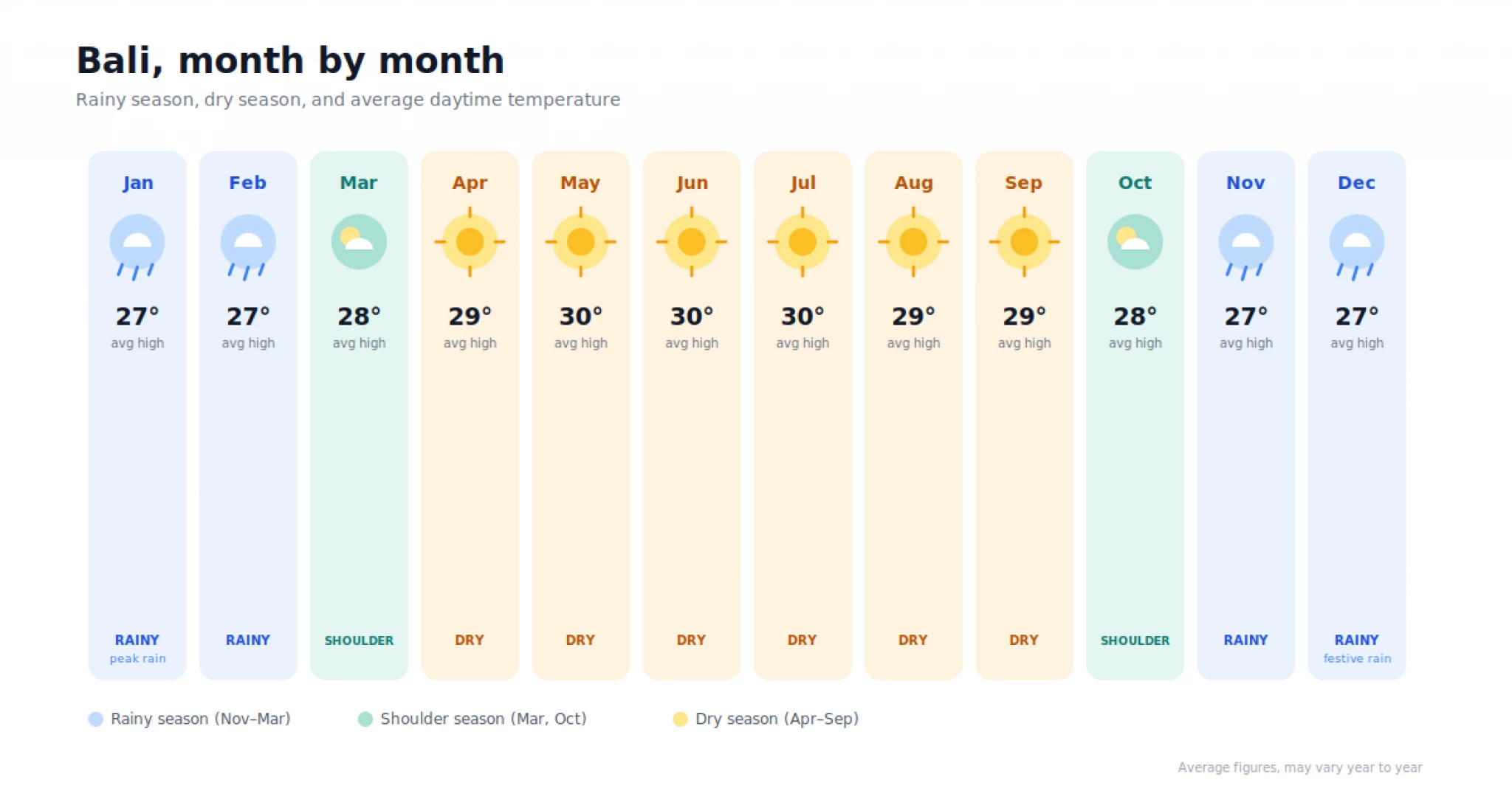
What the Weather Is Really Like
This is the part travellers tend to get wrong. Rainy season in Bali does not mean grey skies from dawn to dusk. Instead, rain usually arrives as a heavy tropical burst, often in the late afternoon or evening, then clears just as quickly. Mornings are frequently bright or only lightly overcast, leaving plenty of room to explore.
A few things to expect across the wet months:
- Warm days, with temperatures generally sitting around 26 to 30°C
- Higher humidity than in the dry season
- Short, intense downpours rather than all-day rain
- Cooler, fresher air once a shower has passed
- The occasional thunderstorm that tends to move through fast
In practice, the rain shapes the rhythm of the day more than it ruins it. You learn to plan outdoor activities for the morning and keep something relaxed in reserve for later.
Is the Rainy Season a Good Time to Visit Bali?
Ask most people about the best time to visit Bali, Indonesia, and they will point you straight to the dry season, when sunshine is near constant and the beaches are at their busiest. By that logic the best month to visit Bali usually falls somewhere between April and October. But "best" depends entirely on what you are looking for. If you want fewer crowds, lower prices, and the island at its greenest, the rainy season quietly makes a strong case for itself, and it is far more enjoyable than its reputation suggests. This is especially true heading into 2026, with travel demand still favouring the busier dry months.
Consider what the wet months offer that the peak season cannot:
- Lush, vivid green rice terraces and jungle, brought to life by the rain
- Noticeably fewer visitors at temples, beaches, and popular attractions
- Better value on villas, hotels, and flights outside the festive period
- Waterfalls at their most powerful and photogenic
- A slower, more peaceful pace that lets you actually relax
None of this means pretending the rain does not exist. It means understanding the trade-off and deciding it is worth it, which, for a growing number of travellers, it clearly is.
Best Things to Do in Bali When It Rains
A rainy afternoon is an invitation, not a setback. Some of Bali's most memorable experiences are at their best when the weather turns.
Spa and Wellness
Bali is famous for its spa culture, and there is no better time to enjoy it than when rain is falling outside. A long massage, a soak in a warm pool, or a full day of treatments feels twice as indulgent with the sound of rain as a backdrop.
Balinese Cooking Classes and Coffee Tastings
Hands-on experiences shine on wet days. A cooking class teaches you to recreate local flavours at home, while a coffee or chocolate tasting is a relaxed way to spend a couple of hours and connect with the island's produce.
Cafés, Galleries, and Cultural Workshops
Bali's café scene is made for lingering, and a rainy day gives you the perfect excuse. Pair it with a visit to an art gallery, a museum, or a craft workshop, and you have an afternoon that is both unhurried and genuinely local.
Yoga and Meditation
The soft sound of rain creates an ideal setting for yoga and meditation. Ubud in particular is full of studios and retreats that run classes for every level, and the calm, green surroundings only add to the experience.
Waterfalls and Rice Terraces at Their Best
Not everything worth doing is indoors. Bali's waterfalls are at their most dramatic during the wet season, and the rice terraces turn a deeper, richer green. As long as you avoid heavy downpours and slippery edges, this is the most beautiful time to see them.
Shopping and Dining
When the rain settles in, it is a fine time to explore Seminyak's boutiques and malls or to take your time over a long lunch. Bali's restaurants range from humble warungs to world-class dining rooms, and a rainy day is the ideal occasion to slow down and enjoy them.
What to Avoid and How to Stay Safe
A rainy-season trip is comfortable and safe with a few sensible precautions. Keep these in mind:
- Take extra care on a scooter during heavy rain, when roads are slick and visibility drops. When it pours, it is often better to pull over and wait it out.
- Avoid rivers, gorges, and clifftops during intense rainfall, as water levels and ground conditions can change quickly.
- Be aware that low-lying areas can flood briefly after heavy rain. These situations usually clear fast, but it is worth steering around them.
- Use insect repellent, especially around dawn and dusk, since standing water can mean more mosquitoes.
- Keep an eye on local weather updates and follow the advice of your accommodation.
Stay flexible and informed, and the occasional shower becomes a minor footnote rather than a problem.
What to Pack for the Rainy Season
A little preparation goes a long way. The essentials are easy to fit in a corner of your bag:
- A lightweight rain jacket or poncho
- Quick-dry clothing in breathable fabrics
- Comfortable, non-slip sandals or shoes
- A compact umbrella
- A waterproof phone cover or dry bag
- Insect repellent
Pack light and practical, and you will be ready to move with the weather rather than against it.
Where to Stay to Enjoy Bali in the Rainy Season
Where you base yourself makes a real difference during the wet months, and this is where a private villa quietly outshines a standard hotel room. A villa gives you space to spread out when a shower rolls in, a private pool you can still enjoy in the warm rain, covered outdoor areas to relax under, and often a kitchen for slow mornings in. Instead of feeling cooped up, you have a comfortable home base that makes the rain part of the atmosphere rather than an inconvenience.
Location matters too. Ubud is a favourite in the wet season thanks to its cooler air, misty mornings, and lush green surroundings, along with plenty of wellness and indoor options. For easy access to beaches, dining, and amenities, areas such as Seminyak, Canggu, and Sanur remain comfortable and convenient whatever the weather.
Final Thoughts
The rainy season in Bali rewards travellers who arrive with an open mind. With the right preparation, a flexible plan, and a good base to come home to, the occasional downpour becomes part of the charm rather than a reason to stay away. Greener landscapes, quieter attractions, and better value are all part of the deal, rain or shine.
Frequently Asked Questions
When does the rainy season in Bali start and end?
The rainy season generally runs from around November to March, with the heaviest rain usually falling in December and January. The exact timing shifts slightly from year to year.
Does it rain all day in Bali during the wet season?
Rarely. Rain typically comes in short, heavy bursts, often in the late afternoon or evening, and clears quickly. Mornings are frequently bright or only lightly overcast.
Is the rainy season a cheaper time to visit Bali?
Yes, outside the festive Christmas and New Year period. Villas, hotels, and flights are often more affordable, and popular spots are far less crowded.
What are the best things to do in Bali when it rains?
Spa and wellness days, cooking classes, café and gallery visits, yoga, and exploring waterfalls and rice terraces, which look their best after rain.
Find Your Perfect Base in Bali
Whatever the season, the right villa turns a Bali trip into something special. Browse the curated collection of villas for rent in Bali to find a private, comfortable base that makes every day enjoyable, sunshine or showers. And if Bali has you thinking longer term, the rainy season's quieter pace is the perfect time to explore villas for sale in Bali and imagine a place of your own on the Island of the Gods.