After 18 years in the Bali real estate market, I am seeing a profound shift. Here is what smart investors are doing today — and what they are avoiding.
By Alban KibarerApril 2026 · 7 min read
Alban Kibarer
Founder · Kibarer Property & K Club Group · Bali since 2007
For nearly two decades, Bali has been the Eldorado of real estate investment in Asia. Now, in 2026, this market is entering a new era — and the rules of the game have changed dramatically.
Thousands of investors from Europe, Australia, and America have acquired villas on the island, drawn by high rental yields and ever-increasing tourist demand. For a long time, the recipe was simple: buy a villa, entrust it to a management agency, and collect the profit. This model worked. For a while.
What I observe from my position — as the founder of Kibarer Property, active in this market since 2007 — is that this cycle has ended. Not because Bali is in decline. Quite the opposite. But the way to invest intelligently has evolved radically, and those who haven't understood this are paying the price.
The End of the Model: Rental Villas Are No Longer Enough
Bali's popularity as an international destination has led to an explosion in the construction of villas for tourist rentals. In some areas, supply has become so saturated that competition between properties is fierce. Seminyak, Canggu, parts of Ubud — new projects emerge from the ground every month, often standardized, often sold with theoretical returns that are difficult to achieve in reality.
I have seen too many disappointed investors. Owners of beautiful villas who struggle to maintain a satisfactory occupancy rate because their properties do not stand out on Airbnb. Success is no longer dependent on simple presence in the market. Investors have become much more demanding: they no longer just look for a property; they want to understand who is actually operating the project and how revenue is generated.
"The market is not disappearing, but it is becoming much more selective. In a competitive environment, success now depends on the ability to create destinations that can attract and retain tourists from all over the world."
— Alban Kibarer, Founder of Kibarer Property
Towards the Ecosystem Model: Real Estate as a Component of a Global Experience
The real question is no longer "which villa should I buy?" but "which project should I follow?" Successful developers today do not sell square meters — they build destinations. Accommodation becomes a component of a much larger service: dining, wellness, experiences, events. This approach generates a flow of visitors that does not depend on traditional rental platforms and strengthens the long-term appeal of each unit.
This is the strategy we have developed with K Club Group: a coherent ecosystem around K Club Ubud, integrating Akar (an award-winning farm-to-table restaurant), Mekar Spa (voted Best Luxury Jungle Spa in Asia in 2025), Kabana, and soon Gray Wellness – a high-performance wellness center capable of hosting up to 100 visitors per day.
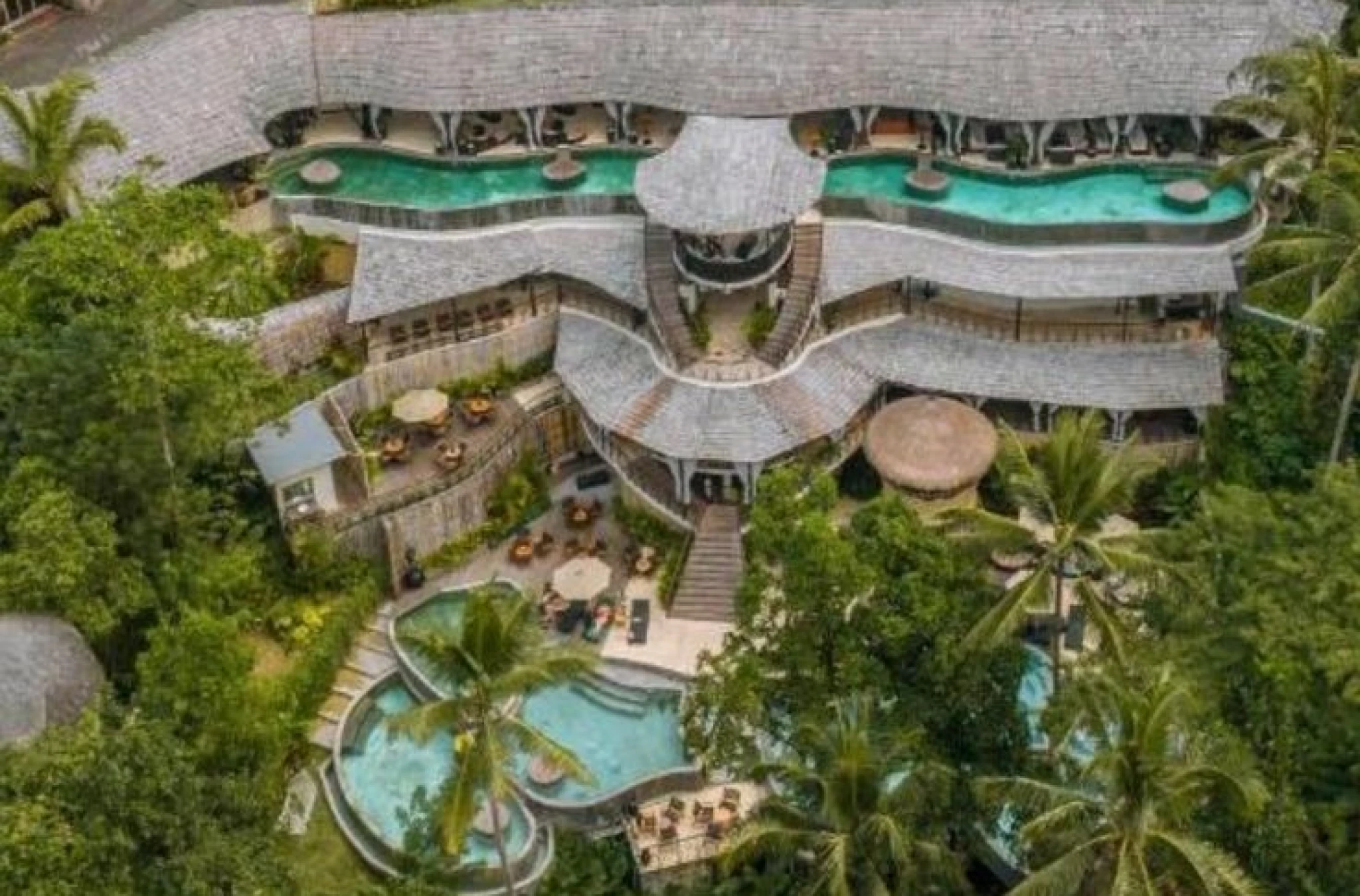
K Club Ubud, Tegallalang — a tourism ecosystem embedded in the heart of the Bali jungle. © K Club Group
Key Statistics | Details |
18 | Years of experience in the Bali market |
1500+ | Properties sold since 2009 |
12% | Projected Net ROI on New K Club Units |
Wellness: The New Driver of Premium Tourism in Bali
At the heart of this transformation is a rapidly growing sector: wellness tourism. Bali is already world-renowned for yoga and meditation, but a new generation of travelers is looking for more. They want to leave in better condition than when they arrived — more efficient, more rested, more regenerated. This is no longer relaxation tourism; it is transformation tourism.
This evolution matches the growing demand I see firsthand: premium international tourists are no longer just looking for a bed. They are looking for a total experience. Biohacking, advanced recovery technologies, longevity programs — these offerings attract high-purchasing-power visitors who return regularly and actively recommend the destination.

Mekar Spa in K Club Ubud — Best Luxury Jungle Spa in Asia 2025. © K Club Group
What This Means Concretely for Investing in Bali Today
If you are thinking about investing in Bali, here are the questions you must ask before making any decision:
Who is operating the project, and for how long?
Is there an ecosystem of services surrounding the hosting that generates traffic regardless of the platforms?
Is the project freehold — full ownership, without time limits?
And above all: what is the real income, not theoretical, of similar units already in operation?
With this in mind, we are now offering investment opportunities in the new units of K Club Ubud — Cocoons. Organic architectural structures integrated into the Ubud jungle, freehold, with projected net returns of 11-12% based on actual operational data. And most importantly: units that are part of an established ecosystem, already operated, and already internationally recognized.
K Club Expansion — Les Cocoons, Ubud
New freehold units under construction within K Club Ubud. Distinctive organic architecture, full integration with the existing ecosystem (Akar restaurant, Mekar Spa, Kabana, Gray Wellness).
Bali is not a market to avoid. It is a market that must be read correctly. Investors who understand this shift — who are part of solid projects led by experienced operators — will continue to find very attractive opportunities on the island. Others risk learning this lesson the hard way.
After eighteen years here, I remain deeply convinced that Bali still has a lot to offer. But not under just any conditions, and certainly not with just any project.