By Alban Kibarer, founder of K-Club Group and Kibarer Property. Having lived in Bali for 18 years, he shares the five convictions that will, in his view, guide savvy investors on the island over the next five years.
You don't ride a wave — you create one. That sentence could have been the title of this article. Arriving in Bali in 2008 without connections, without family capital, with €60,000 and the intuition that an island could become a destination, Alban Kibarer spent eighteen years building one of the most distinctive real estate and hospitality ecosystems in Southeast Asia: Kibarer Property for the real estate side, K Club Group for lifestyle and hospitality — encompassing K-Club Ubud, Mekar Spa, Kabana, Sardine by K-Club, and the K-Club Cocoons.
Today, as Bali emerges from a decade of frenzied expansion and the first signs of saturation appear, he chooses to speak out. To warn, but above all to project forward. Here are the five convictions that will, in his view, define winning decisions between 2026 and 2030.
Conviction #1 — The solo rental villa model is finished. Operated ecosystems are the future.
For nearly fifteen years, the same scenario played out again and again: a foreign investor buys a villa, hands it to a rental agency, collects tax-advantaged income in France thanks to the French-Indonesian tax treaty, and capitalizes on land appreciation. The model worked. It even made early movers wealthy.
"I arrived in Seminyak in 2008, I was 24, I sold cars in Valence, I had no network here. I built two villas with €60,000, sold them within a month of delivery, then built eleven more on the same street. Back then that was enough — you built, you sold, you rented. The market absorbed everything."
But by 2026, the landscape has shifted. In certain areas — Canggu, Berawa, Pererenan, Uluwatu — supply has densified so rapidly that hundreds of villas now look identical. Same architects, same layouts, same pools, same finishes, same listed prices. The consequence is mechanical: competitive pressure drives down occupancy rates and nightly rates. Investors who bought in 2022–2023 on the basis of optimistic projections are beginning to discover the gap between the promise and the reality.
"Many came hoping to generate quick profits. They did — but only for a very short window. Today, their investment isn't as attractive as they were promised."
Kibarer's response is not to abandon real estate, but to rethink it. Against the isolated villa — vulnerable to competition and dependent on booking platforms — he proposes the operated project within an ecosystem. Concretely: accommodation integrated into a larger whole that includes dining, spa, wellness programs, events, and experiences. This is the logic of K-Club Ubud, where the Akar restaurant, Mekar spa, and Cocoons residential units function as a self-reinforcing system.
The distinction matters: this is not about selling 'lifestyle' as a marketing argument. It's about generating structural ancillary revenue that makes the residential unit's return less dependent on occupancy alone. When the restaurant runs, the spa runs, events run — the use-value and attractiveness of the place reinforce each other, and the investor who holds a stake in the whole benefits.
Conviction #2 — Value is no longer where everyone is looking, but where no one yet dares to go.
The golden rule of the past eighteen years, for Alban Kibarer, can be stated in a single sentence:
"We don't follow trends. We create them. Value lies in creation, not in following."
This philosophy is not a tagline. It is an investment method observable on the ground since 2009. Rather than buying land in already-saturated, already-expensive zones, the group has consistently chosen locations ahead of the curve — places where infrastructure had not yet arrived, where the neighbors were rice paddies, where prices per square meter were still reasonable.
Saint Louis and the New Hospital Corridor
The arrival of a major reference hospital in the south of the island is redrawing the value map. Areas previously considered peripheral are becoming strategic for two high-spending populations: long-stay expats seeking quality healthcare access, and medical tourism — a fast-growing segment across Southeast Asia. Investors who position themselves now, before the hospital effect ripples into prices, will benefit from structural repricing.
Nusa Ceningan and the Nusa Archipelago
Thirty minutes by boat from Sanur, the Nusa archipelago — Lembongan, Ceningan, Penida — today offers a rare equation: land prices significantly lower than on the main island, but rental rates already aligned with Bali's. It is one of the only places in the region where the acquisition cost / rental income differential remains favorable. The group is currently developing a beachfront project on Nusa Ceningan with a clear ambition: making the island a car-free zone, accessible only by buggy — a preserved luxury enclave, secluded, the antithesis of the Canggu model.
The Trap of Overpriced Zones
Conversely, certain areas currently marketed as 'the new Canggu' are already, in Kibarer's reading, traps. North Canggu is the clearest example: rapid densification, land prices already pushed high, road infrastructure saturated. "People invest there because it's what they're shown. But a real investor looks at where infrastructure is heading in two years, not where it is today."
Conviction #3 — Wellness will become Bali's primary economic driver of tourism. And it will be data-personalized.
Bali has long been synonymous with yoga, meditation, and spiritual retreats. This image — which built its global reputation — remains alive, but it is no longer enough for the next generation of premium travelers. These visitors no longer simply want to relax: they want to leave measurably healthier than when they arrived.
Concretely, here is what arrival at a K-Club project will look like in 2027–2028: first, a body scan using Visbody technology — the client sees a 3D avatar of themselves and can visualize what their body would look like with more or less weight, more or less muscle mass. Next, an analysis via the Karna machine — a non-invasive equivalent of a blood test measuring approximately 250 biomarkers: cholesterol, stress levels, urinary markers, metabolic indicators. Finally, and most innovatively, biomarker-curated nutrition: all dining at the complex is adapted to the client's biological profile.
"Many people will tell you to eat broccoli, avoid meat. That's not true for everyone. Some bodies don't digest certain foods. If we remove mushrooms from all your dishes because your biomarker justifies it, you'll sleep better, digest better, feel better. That is real personalized medicine."
The goal, over the course of a stay, is to track the evolution of markers daily — or at minimum weekly. This is what transforms a wellness stay into a genuine preventive health assessment. And prevention, in longevity medicine, is the lever whose economic impact will explode in the coming years.
Conviction #4 — The 2030 investor is no longer buying a villa. They are buying a possible life.
The profile of the foreign buyer in Bali has already begun to shift, and the movement will accelerate. For a long time, the typical client was an Australian or European — often French — attracted by Indonesia's favorable tax treatment, buying a second home rented out during absences. The property was a financial product combined with a holiday base.
By 2030, this profile does not disappear, but it becomes the minority. The new client is one who envisions actually living in Bali — at least part of the year. Not as a fantasy, but as a considered decision.
"For fifteen years we were sold the same security promise across various cities. Dubai is the clearest example this year: we discovered that the security on display was partly a mirage. Bali — and Indonesia more broadly — has a precious characteristic: it remains relatively removed from the main axes of international geopolitical tension."
Add to that very concrete factors: a cost of living that remains favorable for earners in hard currencies, a stable climate, a solidly established international community, a quality of daily life that is hard to match. And now, with new hospital infrastructure arriving, the last remaining barrier — access to quality healthcare — is falling.
"The only real risk is infrastructure. If Bali doesn't keep up in terms of roads, networks, and logistics, the island will plateau. But if public investment keeps pace — and everything suggests it will — then the potential of the next ten years is considerable."
Conviction #5 — The fatal mistake to avoid, the right reflex to adopt.
The fatal mistake: coming solely for the return on investment
"The market is oversaturated in certain segments. Everyone has bought or built the same thing in the same zones. A price correction is inevitable. Those who come purely for ROI, without thinking about the operator, the product, the ecosystem, are going to make very bad deals."
Concretely: trusting brochures that advertise double-digit returns without interrogating the revenue-generation mechanics is the royal road to disappointment at three or five years. Many French buyers were seduced by companies that sold dreams. The wake-up call in 2026 is harsh.
The right reflex: work with structured, experienced, long-term operators
The question should no longer be: "What's the advertised ROI?" but: "Who operates the project, for how long, with what track record, and what ancillary revenues make the investment viable even if the rental market tightens?"
"We've been here for eighteen years. We have a long-term vision, we've learned to generate structural ancillary revenues, we have a portfolio of luxury products at accessible prices, and we enable our clients to receive their rental income in a perfectly legal way in France thanks to the tax convention. That is the real product. Not a number in a brochure."
Conclusion: Bali is entering its adult age
The decade ahead will not resemble the previous one. The era of easy opportunities, standardized villas, and PowerPoint-promised returns is over. But this does not mean the end of Bali as an investment destination — quite the opposite.
It means the market is entering a phase of maturity — one where the quality of operators, the coherence of ecosystems, the relevance of locations, and the depth of strategic thinking become the true criteria for success. It also means that investors who can read these signals and surround themselves with the right partners will access opportunities that the previous decade never offered: operated projects, data-driven wellness ecosystems, ahead-of-curve land, and a secure lifestyle in an increasingly insecure world.
"Bali is not merely holding its own. The island is entering its most interesting chapter in twenty years. Provided you read it with the right eyes."
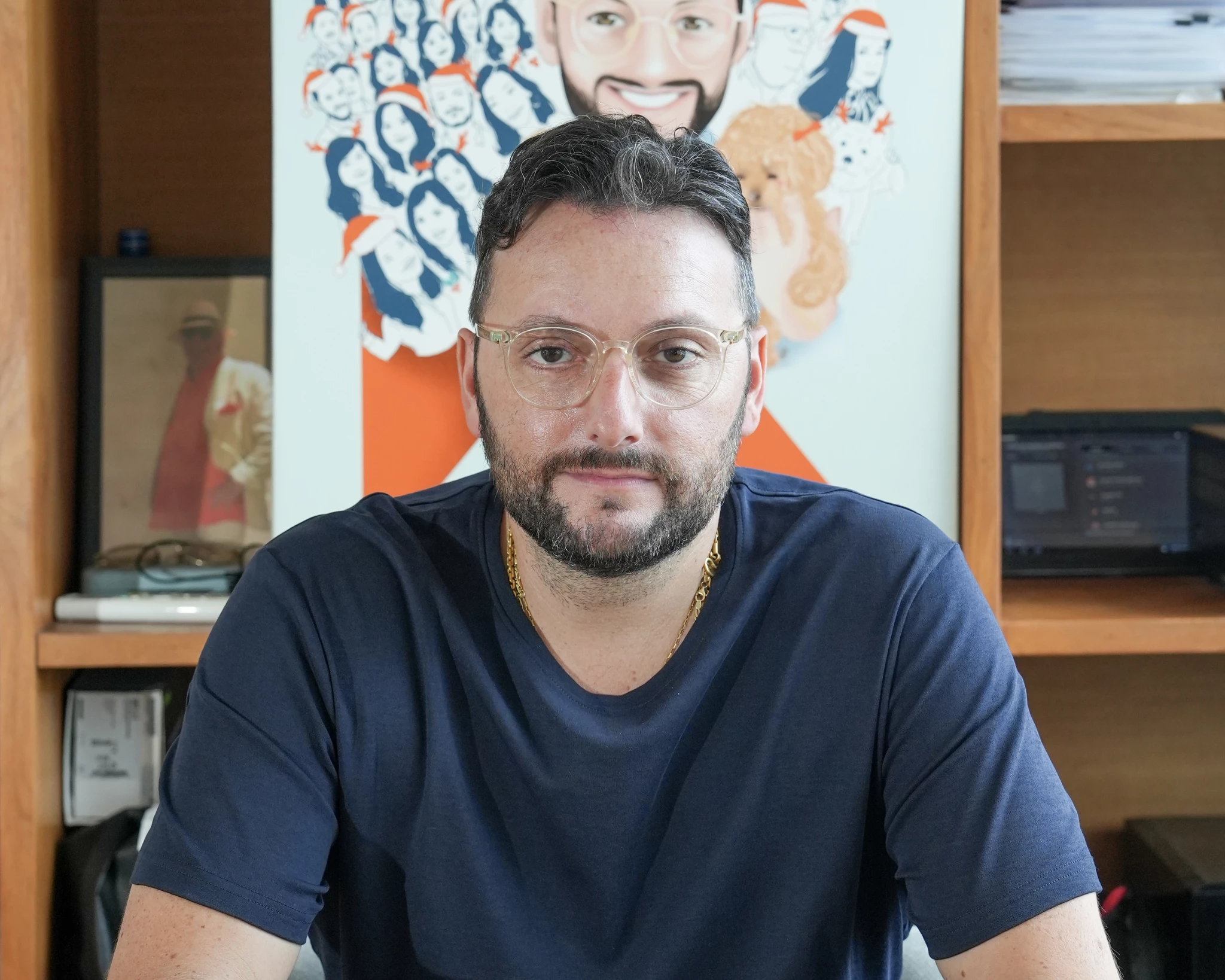
Alban Kibarer / @Alban.kibarer
Founder of K-Club Group and Kibarer Property
Based in Bali for 18 years
LEARN MORE
Official website: villabalisale.com
WhatsApp: +62 8821 908 2080
Email: [email protected]